Showing posts with label books. Show all posts

Tuesday, 3 December 2013

Current reading

Well, I haven't quite finished reading the other items I was working through. All the same, I have another couple of titles which I am reading.

Give Them Wings: The Experience of Children's Literature Edited by Maurice Saxby and Gordon Winch, Sydney: Macmillan 1987
Following my last reading list, a dear friend recommended this book of essays. It is a lovely mix of usefulness and inspiration. I expect it will be a plunge pool I dip into regularly. I can't resist sentences like this,
Children are indiscriminate readers, it is argued, and the avalanche of published mediocrity makes it possible for children to have a steady diet of indifferent books, and such a diet will produce emotional and aesthetic acne. Maurice Saxby (1987) The Gift of Wings: The Value of Literature to Children in Give Them Wings: The Experience of Children's Literature p.11
Saxby goes on to make the point that a wide diet of literature will grow children to value and prefer good literature. Quite apart from the point, I had never thought of emotional and aesthetic acne before. Quite a fun textbook!

I am still reading Ten Ways to Destroy the Imagination of Your Child by Anthony Esolen. I bought a Kindle version. It is entertaining, but I feel I have to play mental gymnastics to follow his argument. I am a bear of little brain these days, so that is tiring. It is also a different perspective from the Project Based Homeschooling, so I am constantly measuring each against the other. This is a great thing to do, but sometimes it is better just to pull out a picture book with the kids.

For joy, I am reading Australian Christian Life From 1788: An Introduction and an Anthology by Iain H.Murray, Banner of Truth Trust, 1988.

Australia has a bizarre and troubling history. It is sobering and encouraging to read the stories of some who loved Jesus here, in the middle of the mess. I am also finding that the more I read about Australian history, the more spills into conversation with my kids.

For the record, my reading is creeping along slowly, with stolen minutes while feeding a baby, or ten minutes before I fall asleep at night. Many of these books will be long term companions.

Wednesday, 13 November 2013

Kids answering their own questions

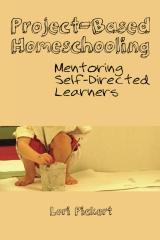
I have really enjoyed reading, Project-Based Home Schooling: Mentoring Self-Directed Learners. Lori Pickert succinctly (and with much more experience than me) articulates the views I've been forming over the years. I won't summarise her work, since it is worth looking at her blog and the book itself.

As a result, I have a few new habits I am working on. I have already mentioned that I think it is important for children to learn to ask good questions. The complementary skill is to be able to pursue answers to their questions. I got to practice this with Mr 4 year old the other day.

Mr 4 loves belts. Belts make him happy because they allow him to carry swords and daggers. He recently lost his precious belt. There has been a time of grief. At a visit to the second hand store, he found a new (old) belt. We bought it. Outside the store, he tried it on and realised it was too big. He was a bit emotional. I almost stepped in and suggested we take it to the leather shop to get more holes punched in it. But I had just been reading this,
Remember to let your child's ideas take precedence. Try to maintain a calm, open attitude and allow him to own his own excitement and interest.
Don't take over. Don't flood him with your own ideas; write them in your journal and save them for later. You may not need them, or your child may come to them on his own. Or, your child may have better ideas – ones you never anticipated. He may take his learning in an entirely unexpected direction. Keeping track of your own ideas can help you stay alert to possibilities, but make sure your child is focused on his ideas, not yours. Let him make the discoveries, and let him chart his own course. Project-Based Home Schooling: Mentoring Self-Directed Learners pp.86-87
So, I shut my mouth and calmly asked for his ideas to solve the problem. There was no real hurry to find a solution. It was a great opportunity where his motivation was high and he could test all sorts of ideas until he found one which worked for him.

At home, Mr 4 raced to the stationery box and pulled out the hole punch. This did not work. Again, he was a bit emotional. As I fed the baby, Mr 4 talked through some other ideas he had to make holes. He tried (carefully?!) stabbing the belt with kitchen scissors. It did not work. He considered finding a needle from his sister's sewing bag, but it could not be found.

At this point, I asked if he could think of anyone else who might have suggestions. No ideas. So, I asked what the belt was made from. As he felt it, he realised it was the same as the stuff we got from the leather shop recently. Then, he put the information together and realised we could ask the people at the leather shop for information and help. But Mr 4 wanted holes in his belt immediately.

Next, I "wondered aloud" about how we get holes in other hard surfaces. He looked around the room and talked about how we make holes in timber. He suggested a "screwdriver". So, without saying what I thought of his suggestion, we decided to look at the tools in the garage.

And there it was. Mr 4 spotted the power drill. We worked out what we would need to put under the belt and took it inside to see if the power drill was our solution. I helped steady the drill while Mr 4 went to work. The drill worked wonderfully and Mr 4 was satisfied being able to lead himself through a complex problem to a solution.


The biggest challenge for me was to stop myself saying, "That won't work because...". The other challenge was saying, "yes" to the messy, unpredictable, meandering process. I'm glad I went with it. It was a buzz for both of us. Small steps to a new habit, I hope.


Tuesday, 5 November 2013

On my reading list

I have some reading to do. I thought I'd share it in case anyone wanted to join me. 
  • A research paper about the academic and social effects of home schooling in Canada and the United States, downloaded from here.
Now, where are my glasses and where is my cup of tea?

Thursday, 17 October 2013

Make your own Ranger cloak and cross bow

As I mentioned here, we have stumbled across all sorts of interesting things from reading the Ranger's Apprentice series. The eight year old is keen to make his own Ranger cloak using this pattern,


Soon after starting archery, the eight year old found a design for making a (harmless) paper cross bow. Here his finished product.


Here are the instructions

Tuesday, 15 October 2013

An 8 year old's accidental history of weapons and warfare

Our 8 year old started archery classes earlier this year. Dozens of home ed kids have a class for an hour and a half each Tuesday. He had been desperate to learn for months. I had postponed the activity for some time, feeling like it was a bit obscure, and not really one of those essential life skills. But, it is so cheap and convenient, that I thought we could afford to have a go.

On the eve of starting, some friends (who also home educate and do archery) suggested he read the Ranger's Apprentice series, by John Flanaghan. So we found the first book and he started reading. He ploughed through them, and Steve set about trying to catch up, to 'supervise' the reading experience. The joy of reading races between father and son are the stuff of another post.

The boys eventually persuaded me to join in. Ranger's Apprentice is a real page turner. The first book starts like a fantasy, with some mythical creatures. As the series progresses, Flanaghan switches into a much more realistic mode. The settings are all fictionalised, but resemble the environments, races and cultures of Europe, North Africa, Asia and the British Isles.

It is set in a pseudo medieval time frame, but with post modern values and politically correct attitudes (and quite a few Australian idiosyncrasies). So, a whole lot of anachronisms really! The writing and descriptions become repetitive, but each plot and setting in the twelve part series is so different that I couldn't resist them.

The great thing about this reading experience was the ongoing conversations between Steve, the 8 year old and I about the books. Even the weaknesses were a catalyst for learning and developing our own thinking and writing.

One thing we all especially loved were the details and explanations about weaponry, training, tactics and strategy in warfare. Flanaghan managed to teach us a whole lot about real historical developments and technologies through a completely fictional world. It so happens that the bow and arrow are the primary weapon of a Ranger, so it has fitted beautifully around our new archery class.

Quite conveniently, last week, we enjoyed a morning with a medieval re-enactment group. Kez documented it here. It was fun to have all sorts of weapons, fighting and technologies demonstrated which were familiar to us from our reading. It added another dimension to our web of learning.

Then, we have jumped on YouTube to find more of the same. Here is a favourite.


Ranger's Apprentice has inspired some creativity. I'll share that later this week.